
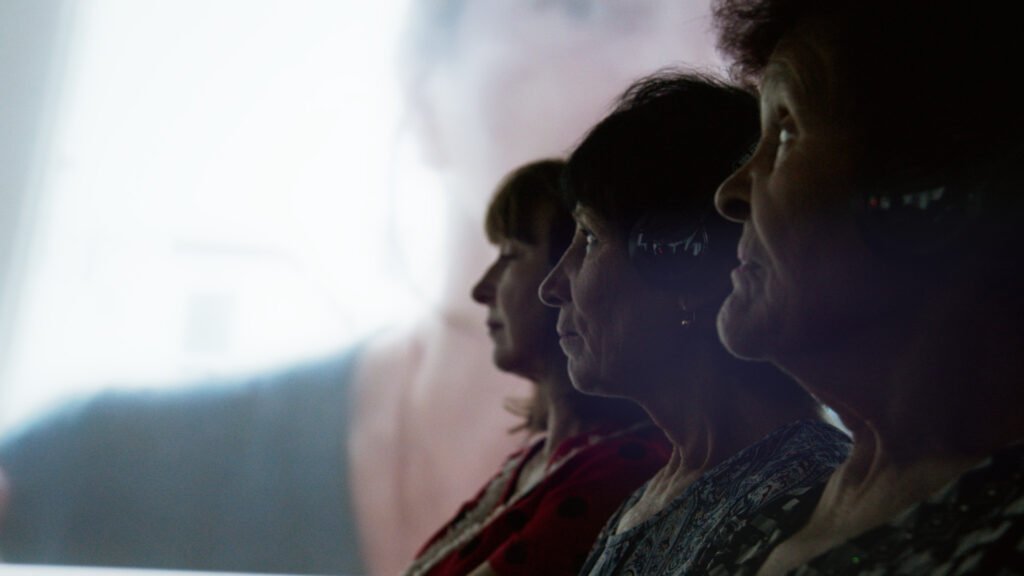
The Berlin International Film Festival traditionally features many politically and militarily themed films. Against this backdrop—at least among those we had the chance to see—the Ukrainian film “Traces” stands out for its extraordinary atmosphere of resistance and… constructiveness. Most films deliver the message: “Enough! Something must be done! Help is needed!” The Ukrainian film, however, says: “We are acting and we are changing things.”
Women who have survived captivity and sexual violence represent one of the most traumatic subjects imaginable. The first thought that arose even while reading the synopsis concerned the challenge of bringing such a topic to the screen—how, and whether at all, such an experience can be represented ethically and adequately in cinema. A similar debate once surrounded the cinematic portrayal of the Holocaust; to this day, Claude Lanzmann’s 1985 documentary “Shoah” is considered exemplary, where the inexpressible experience is “read” through the subtlest nuances of those filmed: the expression in their eyes, the trembling of their fingers.
The experience of sexual violence and its consequences is of a different order, and documenting it is not the central focus of “Traces.” The camera consciously refuses to fully “expose” its protagonists and their emotions to the viewer, delicately “looking away” at the most dramatic moments of their confessions. Warmth and love for the heroines, and a deep understanding of them (literal understanding, since co-director Alisa Kovalenko knows from personal experience what she is filming), are what the film breathes. It is profoundly “feminine”—not simply because it was created by women and about women, but because it conveys a distinctly female perspective on events. It shapes perception—and not merely shapes it, but transforms it.
Country: UKR, POL 20262026
Director: Alisa Kovalenko, Marysia Nikitiuk
Photo description: Tetiana Vasylenko, Nina, Liudmyla Mefodiivna
Section: Panorama 2026
© Alisa Kovalenko
Sexual violence as a form of warfare has been known for centuries; it is also a kind of destruction, albeit symbolic. A woman who has been violated is supposed to be broken by it; her very existence is meant to be defined by shame which, by the strange logic of patriarchal society, falls not on the perpetrator but on her. “Traces” resolutely refuses to stigmatize the victim for someone else’s crime and restores her subjectivity. The stories of Iryna, Olha, Tetiana, Halyna, Nina, and Liudmyla Mefodiivna do not end with recounting their trauma on camera, eliciting sympathy from viewers and horror at the atrocities of war. Above all, this is a story of recovery—difficult and painful, certainly—but most importantly, a story of channeling pain into active engagement.
A separate “heroine” of the film is SEMA Ukraine (part of the global SEMA Network), an organization that supports survivors of sexual and gender-based violence (SGBV) and documents related war crimes committed by Russia. Iryna Dovhan is its founder and head; the other protagonists and co-director Alisa Kovalenko are also members.
In a sense, “Traces” itself can be seen as one of SEMA’s actions: the film not only provides detailed insight into the organization’s activities, but also fulfills an important mission by recording survivors’ testimonies and bringing them to a global audience. Its premiere at the Berlinale and the audience award it received are important steps in accomplishing this mission.
Here one recalls an image from another film presented at the Berlinale—“Josephine” by Bet de Araújo (USA). A girl who witnessed a rape and is haunted by the image of the perpetrator is advised by a psychologist: “Become a ghost for the ghost.” In other words, it is not the victim or the witnesses who should be afraid. The criminals—who face inevitable justice—should be afraid. Members of SEMA (and this is important: men who have suffered SGBV also seek support from the organization), as well as all those working to hold perpetrators accountable, become such “ghosts for ghosts.”
Country: UKR, POL 20262026
Director: Alisa Kovalenko, Marysia Nikitiuk
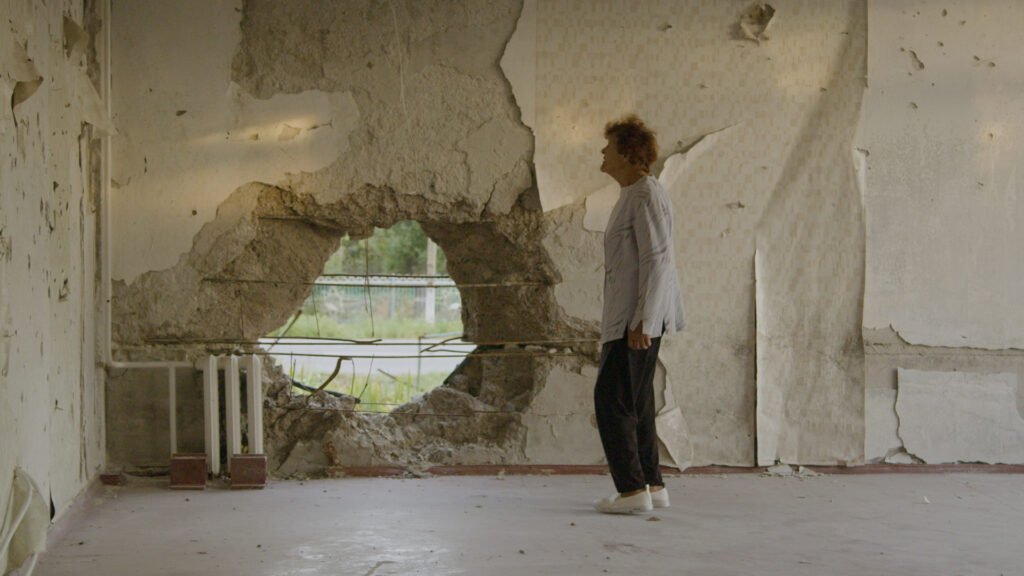
Photo description: Liudmyla Mefodiivna
Section: Panorama 2026
© Alisa Kovalenko
Meanwhile, the painstaking daily work of rebuilding one’s own and others’ lives continues. On a board shown in the film are flower appliqués whose petals are slips of paper bearing the survivors’ life goals. The goals vary—from learning to dance to starting a family—but their purpose is clear: to set a life direction, to learn to live fully again.
Particularly powerful are the words we hear in the film: “They wanted to make us unhappy. But the fact that we are alive, that they failed to break us, that we are happy—that is our victory. And with this, we defeat them every day.” These words, the board of life goals, the scenes showing women restoring their living spaces—their cosmos—patching bullet holes, painting houses, creating art—are perhaps the heart of the film. What captivates viewers, and what seems to have brought “Traces” its highest recognition—the Audience Award—is the spirit of resistance and will to live that it radiates.
Country: UKR, POL 20262026
Director: Alisa Kovalenko, Marysia Nikitiuk
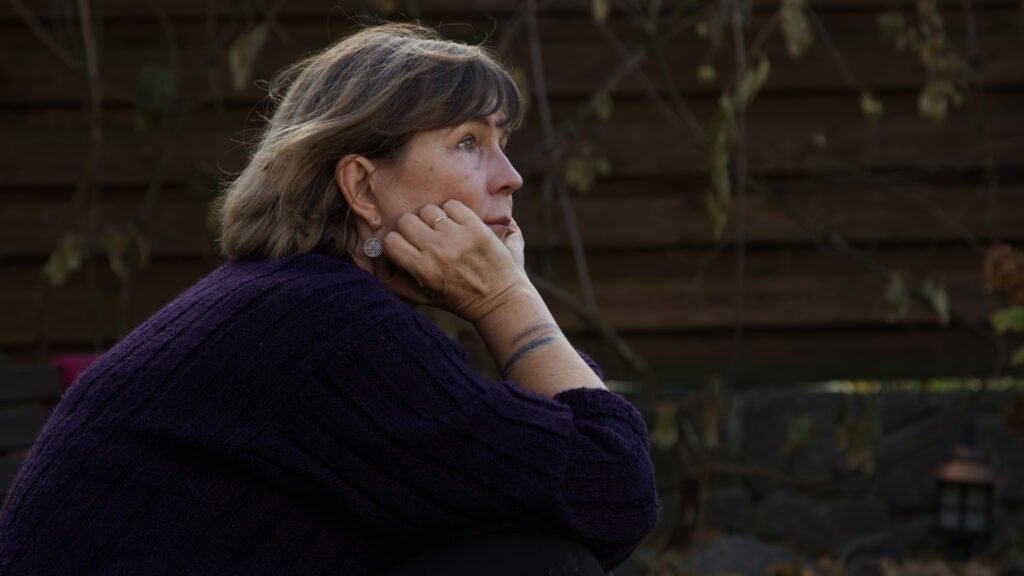
Photo description: Iryna Dovhan
Section: Panorama 2026
© Alisa Kovalenko
These are not stories of people to be pitied or rescued. They are stories of people who act and prevail, because they know truth is on their side and possess the will and knowledge to achieve justice.
On this note, one might conclude the review—but finally, we should mention another feature of the film: its poetic quality. Despite everything, it is also a tender and lyrical work, filled with metaphorical images of nature: the garden recalled by Iryna Dovhan, a sunflower field (perhaps the most emblematic Ukrainian landscape since Dovzhenko’s films), branches encased in ice awaiting the inevitable spring… Not all documentaries employ visual metaphors so extensively—and here, too, one senses an appeal to the Ukrainian poetic cinema tradition.

Country: UKR, POL 20262026
Director: Alisa Kovalenko, Marysia Nikitiuk
Photo description: Alisa Kovalenko
Section: Panorama 2026
In short, another Ukrainian cinematic voice has resounded powerfully on one of the world’s key film stages—and undoubtedly left traces in the souls of its viewers. May this victory become yet another significant step toward restoring justice.

Country: UKR, POL 20262026
Director: Alisa Kovalenko, Marysia Nikitiuk
Photo description: Marysia Nikitiuk
Section: Panorama 2026

 English
  Українська
1 thought on ““Сліди”: кіно про силу жіночого спротиву”