
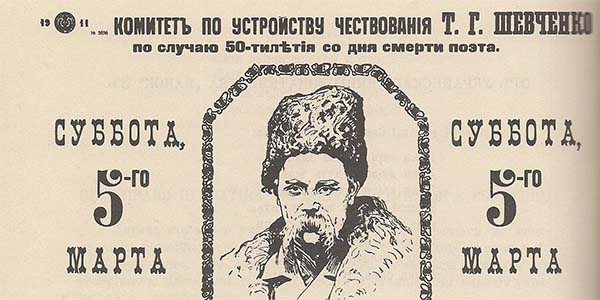
The memory of Taras Shevchenko has always held a special place in Ukrainian life. This was especially strongly felt during the revolutionary years. In 1917, Shevchenko became for Ukrainians a symbol of hope for a future state.
For me personally, as for many Ukrainians, it has long become a good tradition that shortly after the beginning of the calendar spring, we honor the memory of Taras Shevchenko. This has become so ingrained in life that a certain automatic association has emerged: spring — Shevchenko.
Shevchenko in 1917
Until 1917, despite all prohibitions, this date was also celebrated. Sometimes, in some places, almost officially, as described by Dmytro Doroshenko, for example:
In the spring of 1902, sometime in March or early April, the Ukrainian community in St. Petersburg celebrated the anniversary of Shevchenko. Traditionally, on the day of the poet’s death, a solemn memorial service was held at the Kazan Cathedral… In the evening (not always on the same day, sometimes much later), a concert took place, or as it was called in Galicia, an "academy." Comparing to not long before my arrival, the government had begun allowing the Shevchenko concert; prior to that, Shevchenko’s memory was honored with a semi-private banquet in a restaurant.
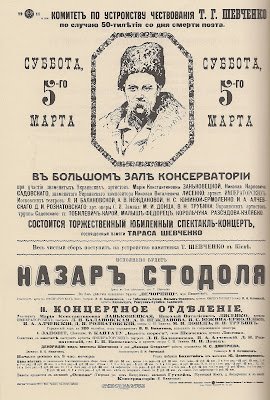

Sometimes, the celebrations took place underground. However, judging by numerous descriptions, they were always held with great enthusiasm. This is not surprising, as there was no state-imposed cult of the "bronzed" Shevchenko yet, and the broader Ukrainian public was not familiar with other artists of such caliber. Moreover, in Shevchenko's works, everyone could find something personal—for freedom, for fate, for love, for the Cossacks, for the sea, for the struggle for happiness… And also about the most diverse Ukrainians. Our great-grandmothers and great-grandfathers saw themselves in his art.
Not everyone knew the details of his biography. Perhaps if they had known that he was not only an artist but also a researcher of the Aral Sea, not just a soldier by coercion but also a sailor, not only a poet and painter but also the author of Ukrainian textbooks for children, they would have been even more proud of him.

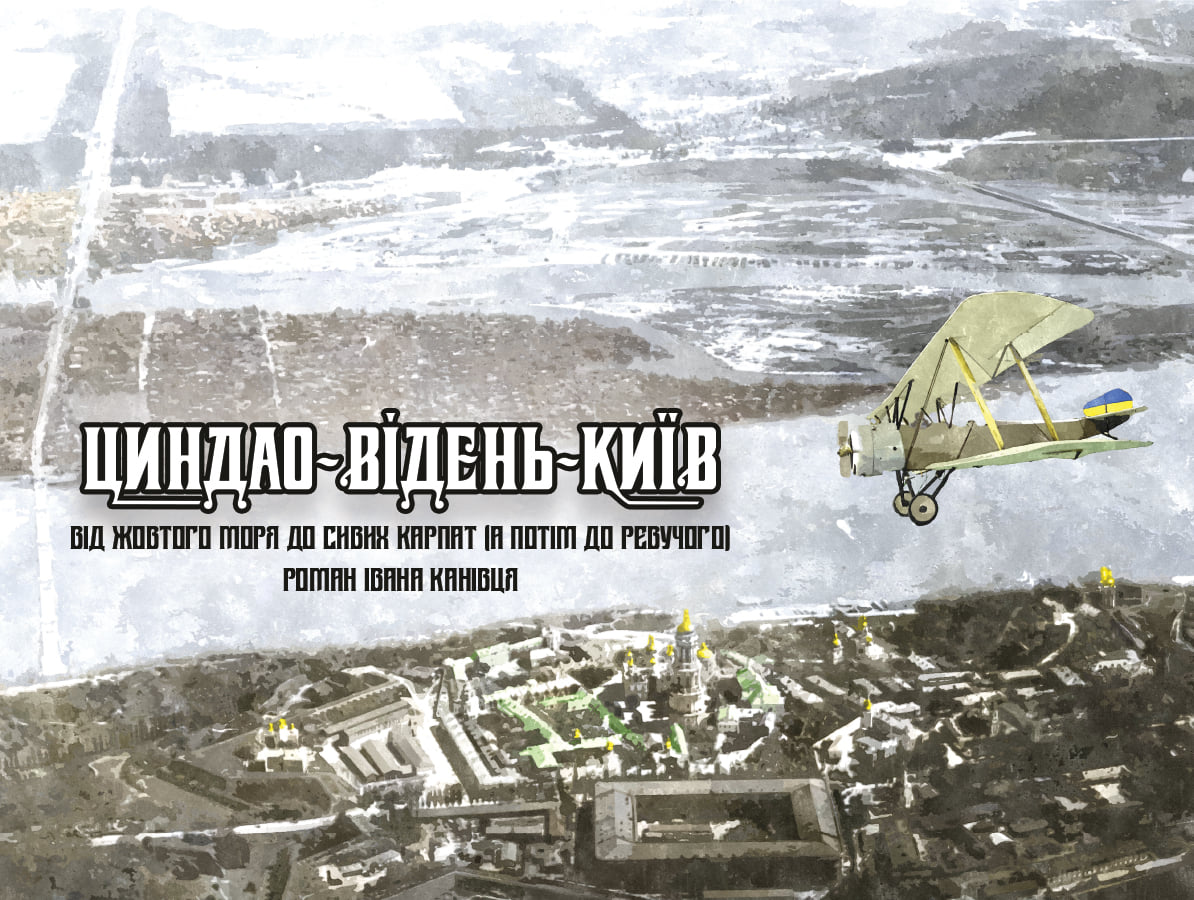
Thus, while working on the historical novel "Tsingtao-Wien-Kyiv",set during the years of World War I and the Ukrainian Revolution, I could not overlook the topic of Shevchenko and the commemoration of his anniversary. My main character (a fictional figure inspired by several real prototypes), after experiencing quite turbulent adventures at the start of the war, finds himself as a Ukrainian Sich Rifleman (USS) in Russian captivity in 1916.
The life of prisoners in Tsaritsyn is described in several sources. What was supposed to unite them? Shevchenko in 1917!

The novel also mentions a large demonstration honoring Shevchenko by the Ukrainians of Tsaritsyn (including those exiled there from central and western regions of Ukraine) in 1917. Of course, the prisoners could not participate directly, but they prepared a wreath, which was allowed to be carried by Ukrainian soldiers from the camp’s guard. It is possible that Yevhen Konovalets, who was entrusted by the camp administration with handling prisoners' administrative issues, might have taken part in the event.
The prisoners themselves heard a chorus of thousands of voices singing "The Testament".
What an epic scene! It seems like they felt something similar to what we experienced on the Maidan while singing the Ukrainian anthem together. I included this scene in the film script that served as the basis for my novel. As my protagonist listens to the singing of "The Testament", he silently makes a promise to Shevchenko… but I won’t reveal the plot too soon. Once the novel is released, the promise will be there.
Of course, for a detailed description, historical information about the Tsaritsyn camp is quite scarce. So, I had to expand on it in terms of the daily life and thoughts of the prisoners. Using fragments from the memoirs of both the Sich Riflemen themselves and other Ukrainians who found themselves in different prisoner-of-war camps, I extrapolate these experiences to this period.
I remember it well: spring — Shevchenko. In February the tsar was overthrown in Russia. At the end of February. And here it was March 9–10. Shevchenko in 1917, even during the war, deserved proper commemoration. The information must already have arrived. Perhaps that is why the soldiers guarding the camp were allowed to carry a wreath from the prisoners. And that meant that in their hearts there was hope!At that time it was still cold in Tsaritsyn; winter had not yet retreated, but it was clear that spring would soon begin to take its rightful place and nature would come alive. The same was true in the empire: essentially nothing had changed yet, but it was clear that if there was no tsar, then everything would soon change. There is a description of how the prisoners learned about the revolution in Russia.
They hoped that freedom for Ukraine was not far away. They would be able to take part in building a new state. It was not for nothing that the Riflemen had taken up arms!Now they were behind bars, and the Ukrainian sea was raging far away, but soon—like the snow around Tsaritsyn—the prison walls would melt away, and they would be able to plunge headfirst into the turbulent waters of the Ukrainian revival.
I am artistically describing all these moods, checking text. It seems everything is beautiful. It fits well with the previous scene, it fits well with the next one. This scene is very important for understanding the changes in the protagonist’s motivation, so I can't afford to make any mistakes here.
But after some time I realized that something here was not quite right. Yes, Shevchenko in 1917—but when exactly was Shevchenko born? On March 9? Right… but then why does one of the brochures from that period say that he was born in winter? The calendar had changed!This is a problem that I have encountered more than once while writing the novel. While the whole world had already been living according to the Gregorian calendar, including the Sich Riflemen, who were citizens of Austria-Hungary, Russia continued to use the Julian calendar. Only in 1918 did Ukraine join the other countries in adopting it.So it turns out that March 9, the date we celebrate today, is according to the new style, that is, the Gregorian calendar. But in 1917 it was February 25!
And what about the Tsar? Supposedly, the February Revolution began on February 23rd. And the abdication was signed on March 2nd. But according to which calendar? I need to check the literature! What do I have on hand? Here, in Shulgin’s memoirs about the Tsar’s abdication, it should definitely be mentioned. It says March 2nd without specifying the style. When was this published? Who knows. Certainly after 1917, but did the monarchist Shulgin accept the new style introduced by the Bolsheviks in Russia? I need to look it up in reliable reference literature.
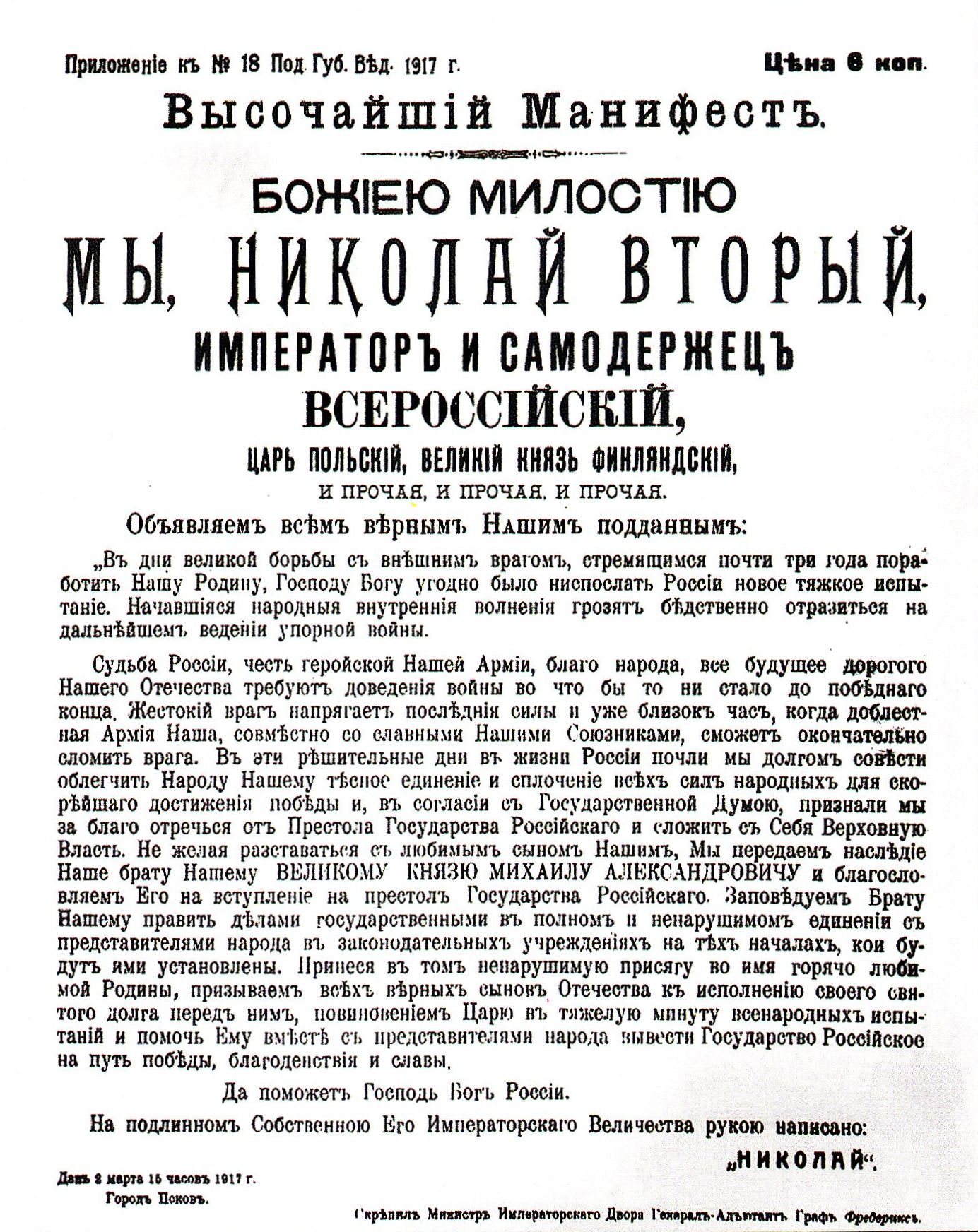
Exactly. February 23 – March 3 in the old style. Shevchenko in 1917 should have been commemorated before the abdication! So, the tsar abdicated on March 2, while the commemoration of Shevchenko took place on February 25 or 26. Therefore, everything written for the novel about those days is nonsense.Considering how such news spread throughout the empire (for example, in Kyiv people learned about the change of power from Bublikov’s telegram, which was sent through the railway network by the man appointed by the new authorities as commissioner of the Ministry of Transport), it is most likely that on March 26 in Tsaritsyn they did not even yet know about the demonstrations in the capital.
A good idea, a decent text, vivid parallels... but all of this belongs to some alternate reality. It needs to be scrapped and rewritten from scratch. One can't approach history like some Ukrainian filmmakers funded by the State Cinema Agency.
The concept is shifting. It turns out: around them, it’s winter, which, like Russian captivity, seems like it will never end—both for the Sich Riflemen and for Ukraine. In such conditions, hope dies, but Shevchenko... he believed. He asked to be remembered in the "great family, the free, new family." So, despite everything, they must believe. He too was surrounded by that damn cold. He died in winter in Petersburg, practically alone. But now, in 1917, there are many conscious Ukrainians, and sooner or later, spring must come for them. They will take it by the hand and lead it home. And indeed. When there are people like Yevhen Konovalets, Andriy Melnyk, and Roman Sushko around, how could it be otherwise?
Now it’s right. And my protagonist makes his promise to Shevchenko.
Indeed, isn’t everyone who does something for Ukraine, in their own way, fulfilling their promise to the Kobzar? Each act, no matter how small or large, can be seen as a tribute to Shevchenko’s legacy, a part of the ongoing struggle for freedom and justice that he envisioned.
P.S. Describing the scene of the demonstration in Tsaritsyn, it was important for me to imagine how it could have happened. To do this, I listened to "The Testament" performed by Taras Kompaniychenko many times. I had a rough recording that we made while selecting songs for the film Generation of Freedom. Taras found the words and notes to recreate how it sounded in the distant 1917. He also checked how I translated these words and the nuances of the singing into written form. I would like to suggest that readers listen to this piece in his performance.
This scene became part of the historical background of the novel “Tsingtao–Vienna–Kyiv”, whose events unfold during the years of the First World War and the Ukrainian Revolution.


 English
  Українська
1 thought on “Шевченко у 1917 році: календар, революція і обітниця”