
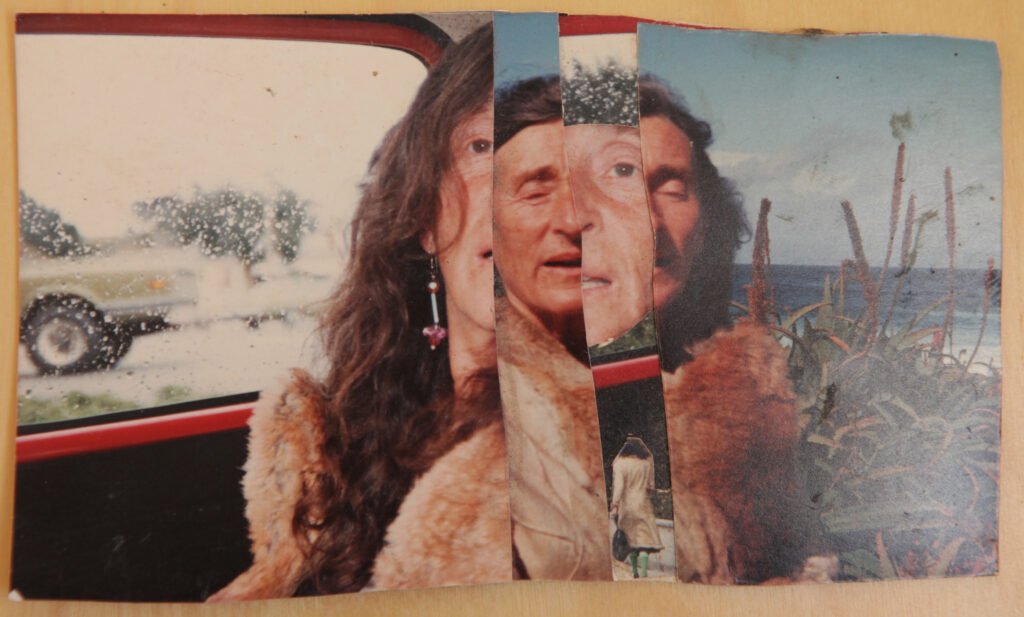
Yo (Love is a Rebellious Bird) | Yo (Love is a Rebellious Bird) Country: USA 20262026 Director: Anna Fitch, Banker White
The 76th Berlinale has come to an end, with its premieres, discussions, and even a few small political scandals. The winners have been announced, the red carpet has been rolled up, and the films are preparing to begin their journey to audiences around the world. Meanwhile, we will take a look back, share our impressions, and talk in more detail about the winning films of Berlinale 2026 as well as the titles that, although they did not receive the festival’s top honors, are no less worthy of attention.
The main trends of Berlinale 2026 remain largely unchanged. “Art for art’s sake” is rarely seen here; almost every film in one way or another engages with social or political issues. This does not always benefit artistic expression: at times trendy ideological elements appear like unnecessary additions to the body of a film, almost like obvious “passes” to Berlinale 2026. On the other hand, there are also sincere and powerful cinematic statements.
Main Winners of Berlinale 2026
One such film is "Salvation" ("Kurtuluş / Salvation") by Turkish director Emin Alper, which received the Grand Jury Prize at Berlinale 2026. This powerful psychological drama presents the story of a mass killing caused by an explosive mixture of hostility and fanaticism. "Salvation" ("Kurtuluş") is based on real events: in 2009, in the Kurdish region of Turkey, a dozen armed men attacked a rival clan that was celebrating a wedding and carried out a massacre, sparing neither the old nor the young. Emin Alper, who once earned a PhD in history, reinterpreted the event and turned it into a semi-parabolic cinematic narrative about the destructive power of hatred: "I began writing a story that refers to modern human history with its mass killings, massacres, genocides, and wars."1.
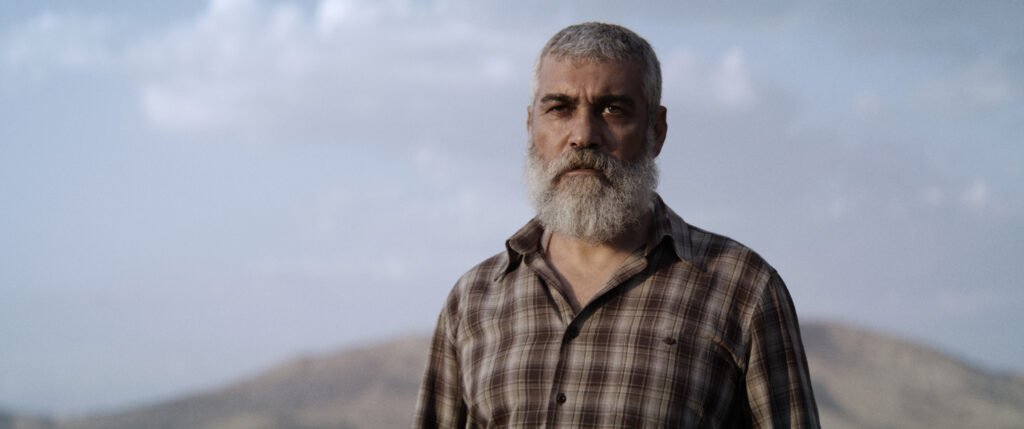
Country: TUR, FRA, NLD, GRC, SWE, SAU 20262026
Director: Emin Alper
Photo description: Caner Cindoruk
Section: Competition 2026
File: 202616780_1
© Liman Film
The film’s story unfolds in a small village. In the past, two clans lived there, but one of them — the one that owned most of the land and influence — fled during yet another war, leaving the village in the hands of the other. Now the “exiled” clan is gradually returning, and the residents are filled with anxiety about an uncertain future. Against this backdrop, a charismatic and influential figure naturally comes to the forefront: Mezut, from a sheikh’s lineage, the grandson of a renowned local leader still respected by the community. Obsessed with visions, he gradually begins to spread them throughout the entire village.
The film unfolds slowly, which makes the depiction of society’s gradual and relentless infection with the “bacillus” of collective madness all the more convincing. Fear for personal safety, greed, a wounded sense of ownership — even if not entirely legitimate (“Land, sacred land!”), clan hostility, and personal ambitions disguised as a sense of chosen destiny all lead to a predictable tragedy. The director offers a resolution that is likewise predictable, yet no less profound and symbolic in its own way. In "Salvation" ("Kurtuluş"), the contemporary and the universal blend together harmoniously — as they should in a true work of art.
A symbolic and political undertone (though without the elegant universalism of "Salvation") characterizes this year’s festival Grand Prix winner, "Yellow Letters" ("Gelbe Briefe") by İlker Çatak (Germany, France, Turkey). The “highlight” of this political drama about an artistic couple persecuted by the system — which apparently helped the film secure the "Golden Bear" — is the literal staging of a Turkish story within German settings. Instead of Istanbul or Ankara, where the story actually takes place, the screen shows Berlin or Hamburg. The concept itself is intriguing, as is the idea behind it: no democracy is immune to the risk of sliding into dictatorship.
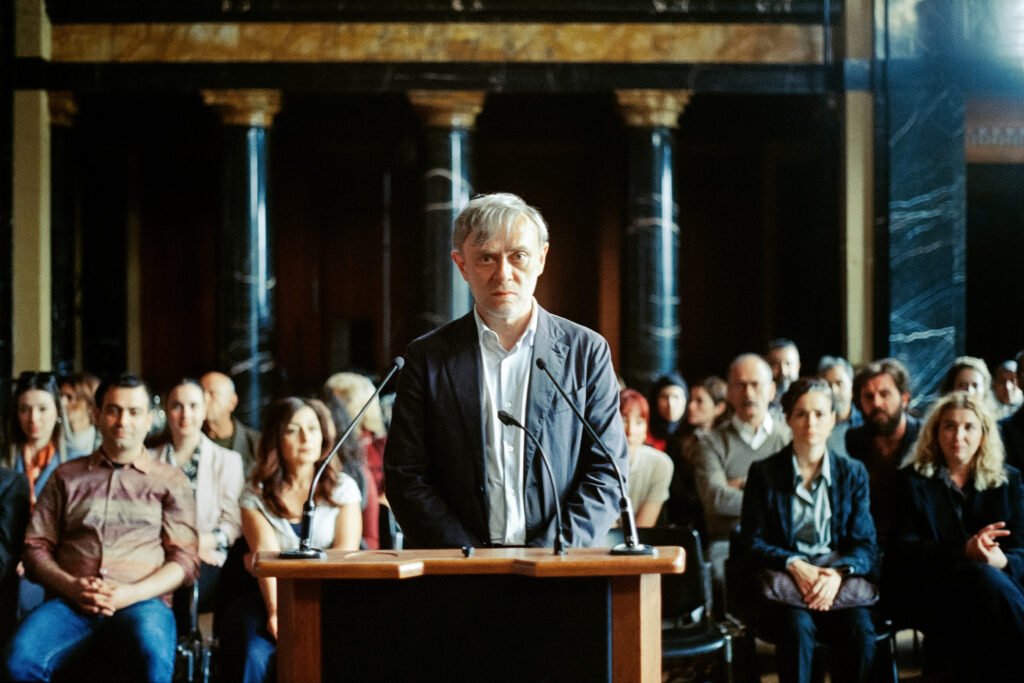
Country: DEU, FRA, TUR 20262026
Director: İlker Çatak
Photo description: Tansu Biçer
Section: Competition 2026
File: 202615786_3
© Ella Knorz_ifProductions_Alamode Film
However, the artistic approach works less in favor of the idea than against it. The film lacks both the abstraction and generalization of classic dystopias such as "Fahrenheit 451", which would allow the story to be perceived as universal, and, on the other hand, the construction of a frighteningly plausible alternative reality rooted in a specific local context, as in "It Can’t Happen Here". In "Yellow Letters", the simple overlay of the complex realities of the Turkish state system — difficult for an outside viewer to fully grasp — onto a contemporary German urban landscape results more in cognitive dissonance than in a convincing artistic statement.
In addition, in the final part of the film the twists and turns of the futile struggle of a theater director and his actress wife against a repressive bureaucracy abruptly give way to a more typical family drama. This includes familiar clichés such as the husband’s unsuccessful creative pursuits, his attempts to control his wife’s career, and the rebellious behavior of their teenage daughter, complete with the inevitable attempt to run away from home. Overall, the film "Yellow Letters" is worth attention as an intriguing creative experiment with a political warning, although not all of its artistic choices are equally convincing.
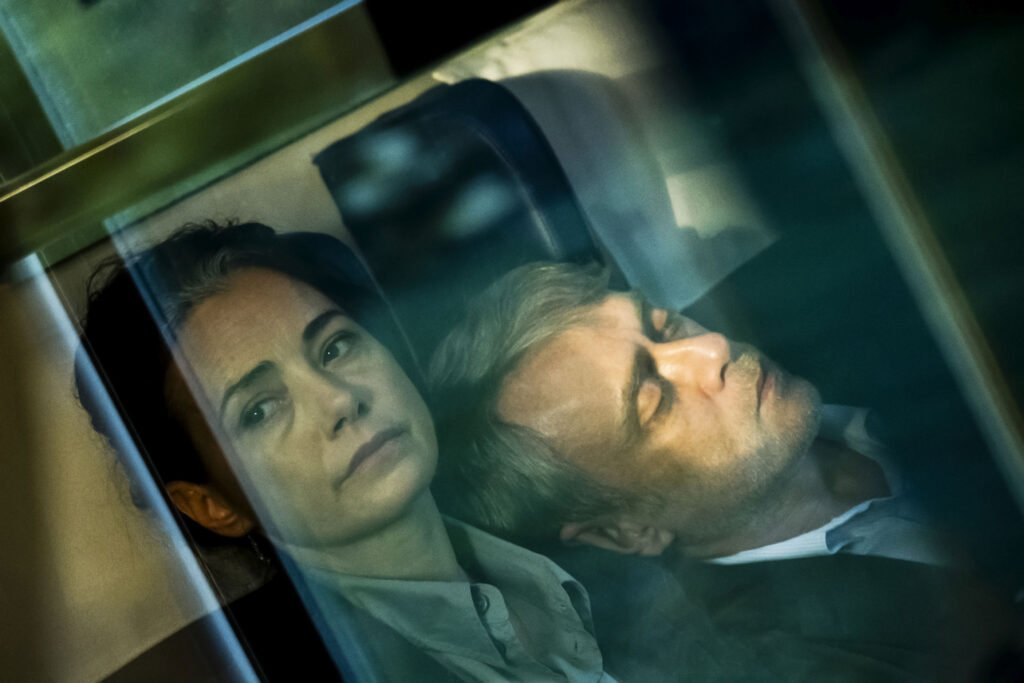
Country: DEU, FRA, TUR 20262026
Director: İlker Çatak
Photo description: Tansu Biçer, Özgü Namal
Section: Competition 2026
File: 202615786_1
© Ella Knorz_ifProductions_Alamode Film
Family dramas, with more or less pronounced social or political undertones, make up the majority of this year’s main competition at Berlinale 2026.
In the “women’s” drama "By the Sea" by Kornél Mundruczó, Amy Adams plays a choreographer and the head of a dance company who is going through a difficult post-rehabilitation period. In terms of its themes — a woman in crisis whose family and career are falling apart, and who no longer even tries to live up to the unattainable ideal of Mother, Wife, and Professional — the film echoes last year’s "If I Had Legs I’d Kick You" by Mary Bronstein, which earned its lead actress Rose Byrne the "Silver Bear" (and may yet bring her an "Oscar"). However, "By the Sea" lacks the same depth and the sharp, merciless (self-)irony of that earlier film."Queen at Sea" by Lance Hammer (United Kingdom, USA) presents the story of a family dealing with a relative suffering from dementia — though approached from a somewhat unexpected angle.

Country: USA, HUN 20262026
Director: Kornél Mundruczó
Photo description: Amy Adams
Section: Competition 2026
File: 202608333_1
© 2026 ATS Production LLC
The heroine played by Juliette Binoche begins to confront her stepfather, who continues an intimate relationship with her mother, who suffers from dementia. At first glance, everything seems obvious (not to mention the questionable nature of consent in the case of a person with dementia, and the possibility that such a relationship could physically harm an elderly woman). However, the situation gradually becomes more complicated.The daughter’s attempt to influence the situation through legal means unfolds into a small bureaucratic nightmare, and the deeper the viewer follows the characters into the story, the more it becomes filled with questions — questions that, in principle, have no clear answers — and the more the so-called “red lines” begin to blur.This subtle psychological study received the Jury Silver Bear, as well as acting awards for Anne Calder-Marshall and Tom Courtenay for their supporting roles as the elderly couple.
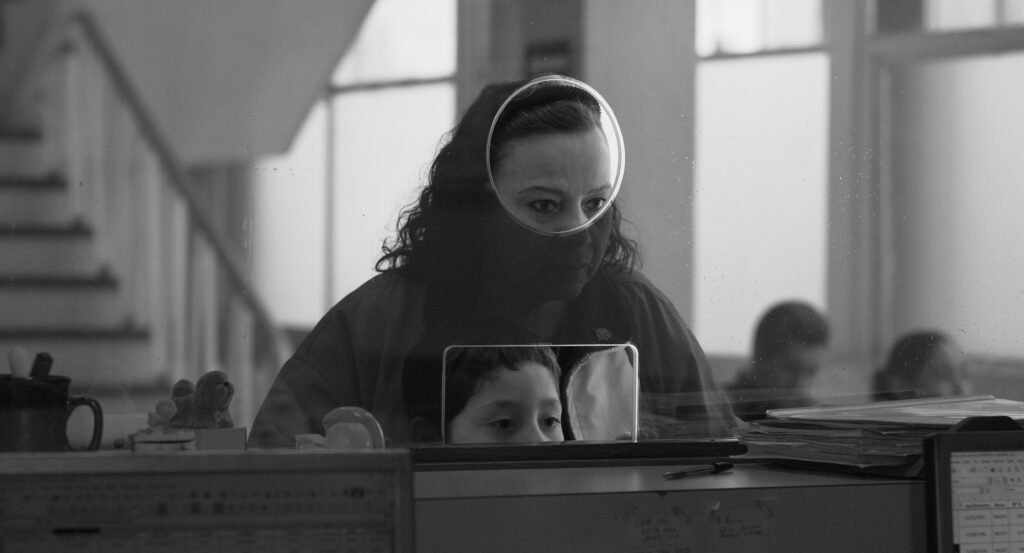
Another humanistic story — this time about an unexpected friendship — received the Ecumenical Jury Prize. The Mexican film "Moscas" ("Flies") by Fernando Eimbcke tells the story of an unfriendly, lonely woman who lives near a large medical center and decides to rent out a room on a short-term basis to relatives of patients.The very first tenant — a man whose wife is hospitalized with cancer — brings her nothing but trouble. At first he hides his nine-year-old son from her (apparently to avoid paying for two people), and then he leaves in search of work and disappears for a couple of days, leaving the child alone.
Country: MEX 20262026
Director: Fernando Eimbcke
Photo description: Teresita Sanchez, Bastian Escobar
Section: Competition 2026
File: 202610010_1
© Kinotitlán
Meanwhile, the boy unsuccessfully tries to get into his mother’s hospital room, where only adults are allowed. Against this touching backdrop unfolds the story of the woman’s gradual “thawing” (as we later understand, she herself once experienced the loss of a loved one) and her growing friendship with the young tenant.The story is simple and predictable, yet it is told with warmth and ease, drawing on those “eternal values” — kindness, compassion, and love — that people never stop believing in. The film is shot in black and white, a choice that may seem somewhat unexpected for such a modest story, but one that ultimately gives it a more universal tone.
The only documentary in this Berlinale 2026 program, "Yo (Love is a Rebellious Bird)" by Anna Fitch and Banker White — winner of the Silver Bear for Outstanding Artistic Contribution — is also dedicated to the theme of friendship, exploring it from an unusual artistic perspective. It is something of a documentary portrait, a film-essay devoted to an elderly woman and a miniature replica of her house in which scenes are staged.Yo, or Yolanda, an Italian woman who once emigrated to the United States, formed a friendship in her later years with artist Anna Fitch. Using a film camera, Fitch reflected on this friendship and gradually transformed it into an entire artistic project.

Country: USA 20262026
Director: Anna Fitch, Banker White
Photo description: Anna Fitch
Section: Competition 2026
File: 202610484_1
© Mirabel Pictures
Yolanda — it is difficult to speak about her in the past tense — was a unique, rebellious, and artistic personality. At the press conference, the director explained that her protagonist never performed pre-prepared scenes for the camera; in fact, there was no need for that. She freely improvised her truly vivid monologues.The result is a film that is, to some extent, in memoriam, but above all a lyrical story of friendship at the intersection of two rich inner worlds of women.
The meeting of different cultural worlds is explored in the monumental (though somewhat overlong) three-hour film "Dao" by Alain Gomis (France, Senegal, Guinea-Bissau), notable for its documentary-like style. The film tells the story of a family of emigrants from Guinea-Bissau, and scenes of visiting relatives in Africa during an ethnographically detailed family memorial ceremony are interwoven with scenes of a wedding in France, highlighting the synthesis of local and African cultures.
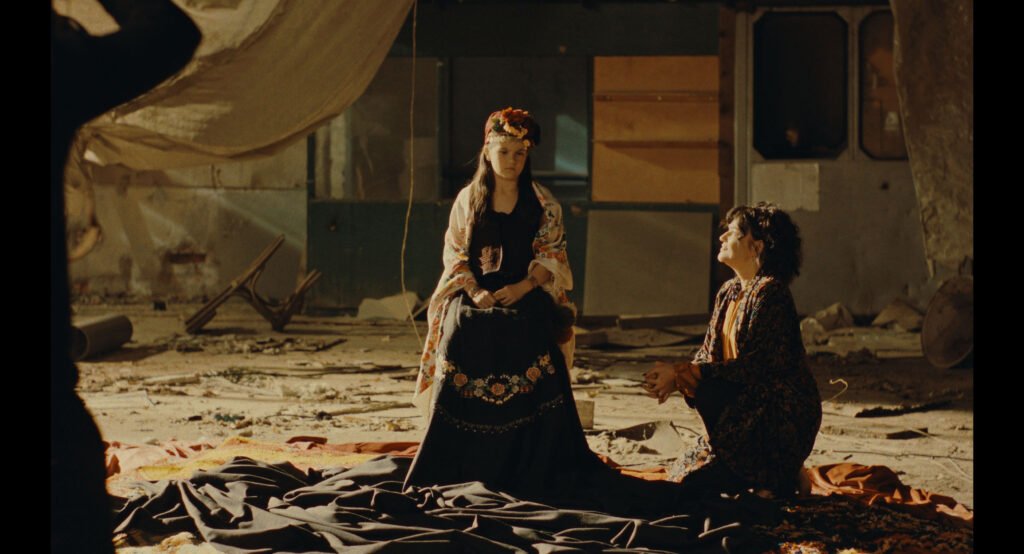
The Canadian-Bulgarian film "Nina Rosa" by Geneviève Dulude-De Celles, which received the Silver Bear for Best Screenplay, examines the questions of identity and migration from another perspective. While the characters in "Dao" seem to have no real issues with their diasporic identity — moving freely between France and Guinea-Bissau, feeling increasingly at home in the former while still remaining rooted in the latter — in "Nina Rosa" the focus shifts away from globalization and multiculturalism toward the threats these forces may pose to local identities.
Country: CAN, ITA, BGR, BEL 20262026
Director: Geneviève Dulude-de Celles
Photo description: Sofia Stanina, Chiara Casselli
Section: Competition 2026
File: 202606549_1
© Alexandre Nour Desjardins
The film’s protagonist, Mikhail, left his native Bulgaria for Canada some twenty years ago. Now a successful art dealer, he still carries the trauma of emigration within him, which makes his new task all the more difficult: to travel back to Bulgaria and determine whether the so-called prodigy — a young girl painter from a small village — is genuine or a fake.The two figures stand in contrast to each other, yet also complement one another: Mikhail, or Michel, who once exchanged a poor life in his homeland for the hope of a better future for himself and his daughter, and the young artist who, at any cost, wants to remain at home, rooted in her native land.
Behind the child’s reluctance to embrace change lies a much deeper fear: that by losing her native ground, she might lose herself and her voice. “You can’t keep playing the card of a talented girl from the Bulgarian countryside forever,” says an Italian gallerist sympathetic to the young artist and willing to take her under her wing — and this is not professional cynicism so much as simple pragmatism.Thus, the girl and her mother face a stark choice: either a poor life in their native village and the likelihood of being forgotten, or a future abroad where, once placed on the conveyor belt of the art world, the young artist may lose her uniqueness.
Interestingly, the screenwriter — who is also the film’s director — presents precisely this alternative: either the “Bulgarian countryside” or Western art academies, as if artistic education and a successful artistic career were impossible within Bulgaria itself. Thus, behind the sympathetic perspective and the apparent support for regional authenticity one can still sense that familiar old “Western” condescension toward the so-called “barbaric East,” even when it is European.Nevertheless, despite the irony that such an approach inevitably provokes, the film can still be recommended as a reflection on all the issues mentioned above: migration, national and cultural identity, artistic self-expression, and ultimately the right to determine one’s own destiny.
The most visually refined work is "Everyone Loves Bill Evans" (Ireland, United Kingdom) by Grant Gee, which we have already discussed in a separate article, so we will not dwell on it here. This intimate psychological drama about a famous jazz pianist slowly emerging from a deep psychological crisis brought its director the "Silver Bear" for Best Director.
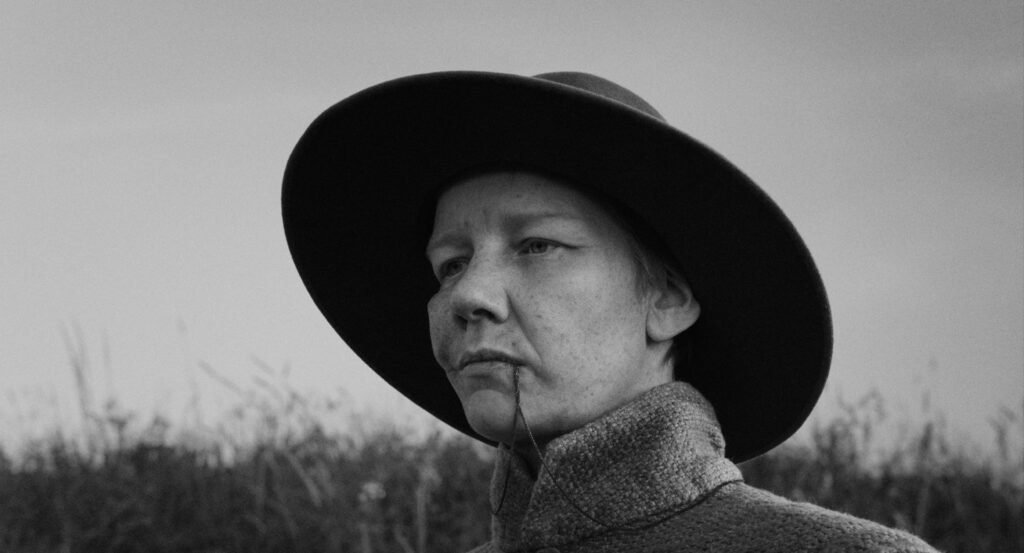
As we can see, the winning films of Berlinale 2026 present a rather diverse picture. Interestingly, there was only one historical drama in this year’s competition program (if we do not count "Digga Evans", which is set in the early 1960s)."Rosa" by Markus Schleinzer (Austria, Germany) brought its lead actress Sandra Hüller the "Silver Bear" for Best Leading Performance. Berlinale awards are not divided into male and female categories, but in this case the distinction seems particularly fitting, as Hüller plays a woman who passes herself off as a man in a German rural community of the 17th century. The film is also shot in black and white, as if emphasizing that the time and place allowed no shades of gray.
Country: AUT, DEU 20262026
Director: Markus Schleinzer
Photo description: Sandra Hüller
Section: Competition 2026
File: 202614656_1
© 2026_Schubert, ROW Pictures, Walker+Worm Film, Gerald Kerkletz
According to the plot, the woman whose name gives the film its title assumes a male identity (“men’s clothing gives more freedom,” she later explains) and, after a bloody period of military service — the times, it should be remembered, were extremely turbulent — decides to settle down. Taking the name of a fallen comrade, she arrives in his village and claims his inheritance.The “newcomer” is accepted — with suspicion, but accepted nonetheless. “He” starts a family and lives as a respected member of the community, until a chance event eventually reveals “his” true identity…
"Rosa" echoes in a curious way another German film from the Berlinale 2026 parallel program "Perspectives". In the psychological drama "Without a Home" ("Der Heimatlose / Trial of Hein") by Kai Stenicke, the protagonist returns home to a small fishing community after many years abroad. However, the villagers strangely fail to recognize him and organize a kind of improvised trial so that he can prove his identity.
"Rosa" and "Without a Home" approach the same problem from different angles: conformity to social norms and the ability to “play by the rules.” In "Rosa", the impostor (as we know from the very beginning) successfully “plays by the rules” and quickly secures a respected position. Yet she loses it just as quickly once the deception is revealed. Moreover, what provokes the greatest anger in the community is not the fraudulent claim to property, but the act of impersonating a man — that is, violating the “laws of nature” and, even more importantly, the laws of a patriarchal society, in other words, a woman laying claim to “male” rights and privileges.Hein, the protagonist of "Without a Home", truly is the person he claims to be — yet he can regain his status only when the community “recognizes” him. And the community can recognize not Hein himself, but only the image of him that it has created.
Hein’s trial takes the form of an exchange of memories (only if they match will he win the case), and the film cleverly plays with the contrast between “official,” public memories — based on shared expectations and adherence to social rules — and private, internal memories that reflect personal experiences and individual perspectives. Thus, only by understanding what kind of memories the community expects from him can Hein win the case for his own “self” and his place within the community.In this sense, "Rosa" shows how one can wear the perfect social mask — and still become a hostile “other” because of some more or less accidental factor; "Without a Home", on the other hand, illustrates how one may fail to belong within one’s own community until that social mask is finally put on.
We fear that we may have revealed too many spoilers in our discussion of both films, but we still highly recommend watching them. Both works are strong both in their thematic depth and in their artistic execution (in particular, "Without a Home" received the Jury Prize at the Teddy Awards).
The most interesting films of the 2026 Berlinale
The scope of this article does not allow us to discuss all the winning films of Berlinale 2026 in detail (some of them will be mentioned in our upcoming review dedicated to women’s themes for March 8). Nevertheless, we would still like to highlight a few films from other sections of the festival program.
One of the most renowned guests of Berlinale 2026 was the German director Ulrike Ottinger, whose films appeared in two programs at once. Her 1989 film "Joan of Arc of Mongolia" was included in the "Retrospective" section, while the long-awaited premiere of the long-gestating project "The Bloody Countess" ("Die Blutgräfin") took place in the Berlinale Special program. The screenplay was co-written by the renowned writer Elfriede Jelinek.This striking film, starring Isabelle Huppert in the leading role and featuring lavish scenography and costumes, is something of a postmodernist play with genre conventions. Alongside the countess-vampiress herself — none other than the legendary Elizabeth Báthory — the screen features her nephew, a vegetarian vampire, a loyal vampire maid, two detectives in checkered jackets, elderly scholars of vampirology, and a number of other, less central but equally distinctive characters.
"The Bloody Countess" stands out primarily for its playful approach to form and genre, and it does not really aim for narrative depth. In contrast, another film presented in the same program, the American production "The Testament of Ann Lee" by Mona Fastvold, starring Amanda Seyfried in the title role, offers a broader field for reflection. Somewhat unexpectedly, the film wraps the story of the leader of the Shaker religious sect in the form of a musical — though we will explore this in more detail in another article we have already announced.
We will write about "Good Luck, Have Fun, Don’t Die" by Gore Verbinski separately, but for now it is worth mentioning that it is a witty satirical science-fiction comedy about the dehumanizing influence of social media and artificial intelligence.
If you enjoy tragicomedies with a New York vibe, we can recommend "The Only Pickpocket in New York", starring John Turturro as a petty thief who steals the wrong thing and becomes entangled with the mafia. And if you prefer a tightly crafted dramatic action film with a humanistic undertone, there is "The Weight" by Padraic McKinley, starring Ethan Hawke as a devoted father during the Great Depression who must do everything possible to free himself from unjust imprisonment.
It is also worth mentioning "A Prayer for the Dying" by Dara van Dusen — a piercing, profoundly oppressive existential western set in the American heartland after the Civil War, about a person confronting the inevitability of death and helplessness in the face of catastrophe.
The Korean film "My Name" by Chung Ji-young deals with the trauma of the postwar experience spanning several generations. The film combines two time frames — a coming-of-age story of a teenager with a girl’s name in South Korea of the 1990s, and the story of his mother, who suffers from a mysterious illness and, during a complex and painful psychoanalytic process, recalls the defining events of her childhood during the Korean War.
Finally, in the context of the current war in Iran, it is impossible not to mention "Roya" by Mahnaz Mohammadi — a psychological drama with a complex temporal structure about an Iranian dissident schoolteacher who is released from prison for a couple of days to attend a funeral.The film, which addresses the repression of the Islamist regime, conveys the atmosphere of the total prison that the entire country has effectively become. Even after temporarily escaping the prison walls, the grief-stricken heroine constantly feels the gaze of a watcher upon her. To gain freedom, it is not enough simply to step outside the prison walls — the entire system built on total unfreedom must be broken. Roya understands this, and so do the protesters in Iran who have taken and continue to take to the streets, while the film on European cinema screens reminds Western audiences of what people inside the country are fighting against.
We were only able to cover a small part of the program, focusing primarily on feature films. We have already written about the Ukrainian program at Berlinale 2026, including the Ukrainian documentary film "Traces" by Alisa Kovalenko and Marysia Nikitiuk (winner of the Audience Award in the "Panorama" section), as well as about several Iranian films.We will continue publishing articles about noteworthy films from the Berlinale 2026 program, so stay tuned for our updates.
1 https://variety.com/2026/film/festivals/emin-alper-berlin-salvation-genocides-wars-1236663698/


 English
  Українська
1 thought on “Берлінале 2026: переможці, головні фільми та огляд фестивалю”