
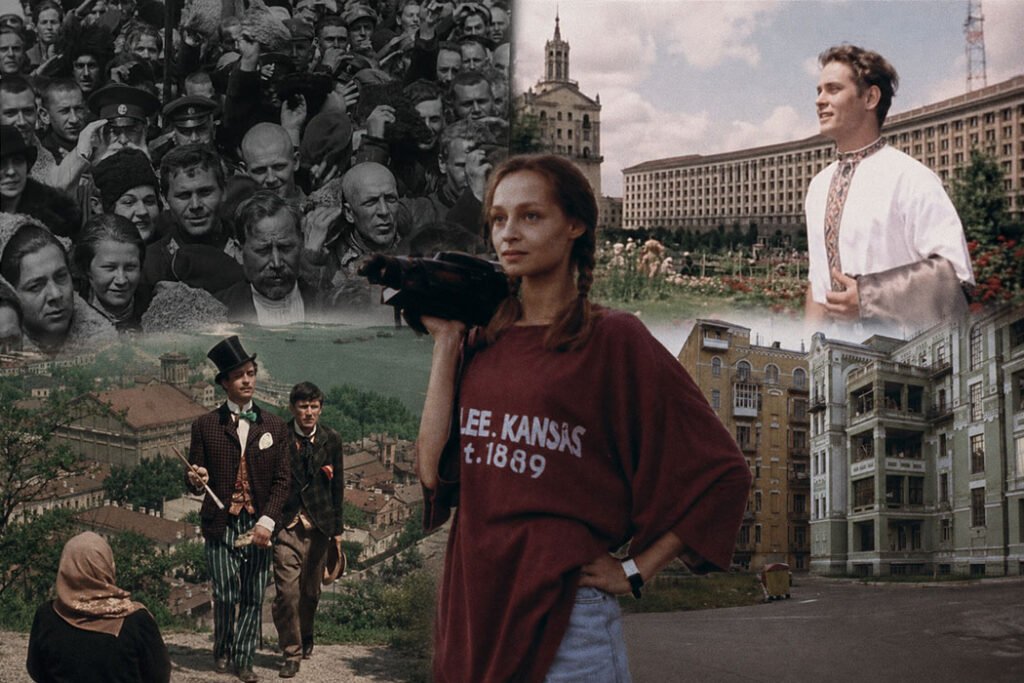
With Kyiv Day now behind us, it is worth taking a look back at how Ukraine’s capital has been captured by the silver screen. Kyiv has appeared in cinema time and again, though it must unfortunately be acknowledged that the city has never quite developed a fully realized cinematic mythology of its own. Yet several screen portrayals of this millennium-old city have become significant landmarks in both Kyiv’s history and Ukrainian cinema.These films explore and interpret Kyiv and its inhabitants from a variety of perspectives, together offering a rich and complex portrait—much like the city itself, whose identity is equally multifaceted and layered.
Revolutionary Kyiv: “Arsenal”
The most brilliant—and also the most controversial—cinematic portrayal of Kyiv is undoubtedly found in Oleksandr Dovzhenko’s "Arsenal" (1929). This classic of Soviet avant-garde cinema, and of the revolutionary film genre more broadly, is rarely discussed today as a “Kyiv film.” For good reason: it glorifies the Arsenal Uprising and the subsequent occupation of the city by Mikhail Muravyov’s Bolshevik forces, while simultaneously ridiculing what it labels “Ukrainian bourgeois nationalism,” whose center and stronghold was Kyiv itself.Yet despite its ideological agenda, "Arsenal" remains one of the most striking screen depictions of the city ever created. Dovzhenko transforms Kyiv into a dramatic stage on which competing visions of history, revolution, and national identity collide, capturing the city at a moment of profound upheaval and change.
Dovzhenko’s cinema, however, is never only about what is being shown, but also about how history is presented. The film centers on a proletarian communist returning home to find revolutionary chaos accompanied by the rise of what the filmmaker depicts as “petty-bourgeois nationalism.” Dovzhenko fills the screen with unforgettable caricatures: a frail old intellectual lighting a vigil lamp before a portrait of Taras Shevchenko, only for the poet himself to blow it out in disgust; the assorted “types” gathered on Saint Sophia Square—a schoolteacher covered in unpleasant warts, a sly-faced cooperative organizer, dim-witted gymnasium students—and, above all, clergymen, clergymen, clergymen. In the social imagination of the time, their omnipresence served as a shorthand for backwardness and reaction.
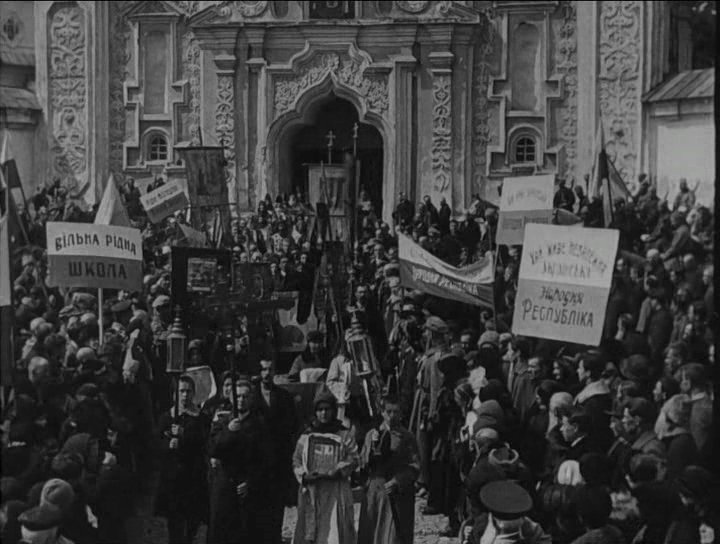
To glimpse the “real” Kyiv hidden within "Arsenal," however, one must look not at the foreground but at the background—as in this shot of a religious procession. In the wider crowd scenes, entirely different faces emerge: dignified, intelligent, and strikingly beautiful. It is quite possible that many of the extras, like Dovzhenko himself, had participated in the public celebrations of 1917–1918 and remembered them vividly.What did they think and feel while helping to create what was, in essence, a caricature of their own experience? Unfortunately, that is something we are unlikely ever to know.
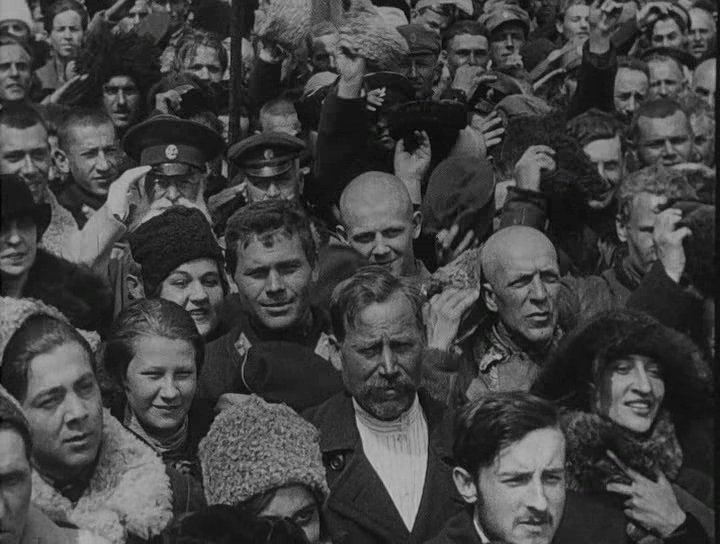
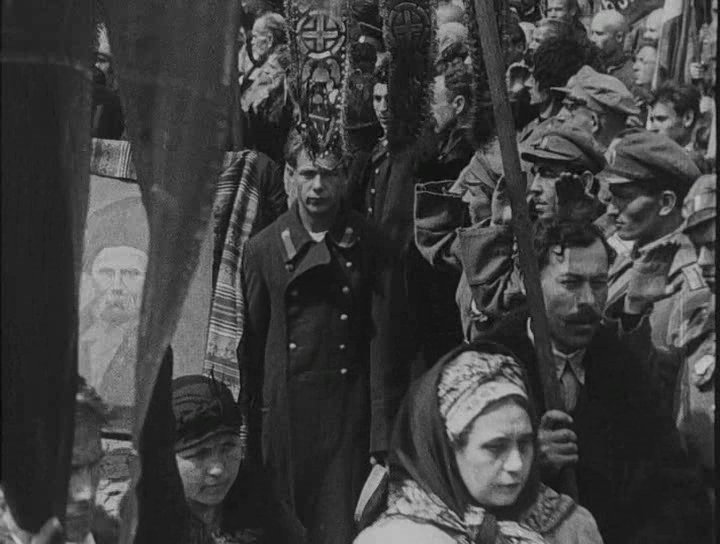
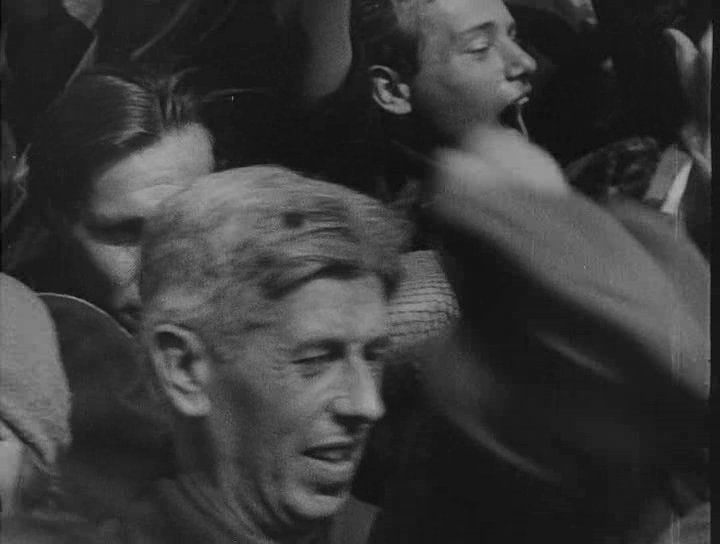
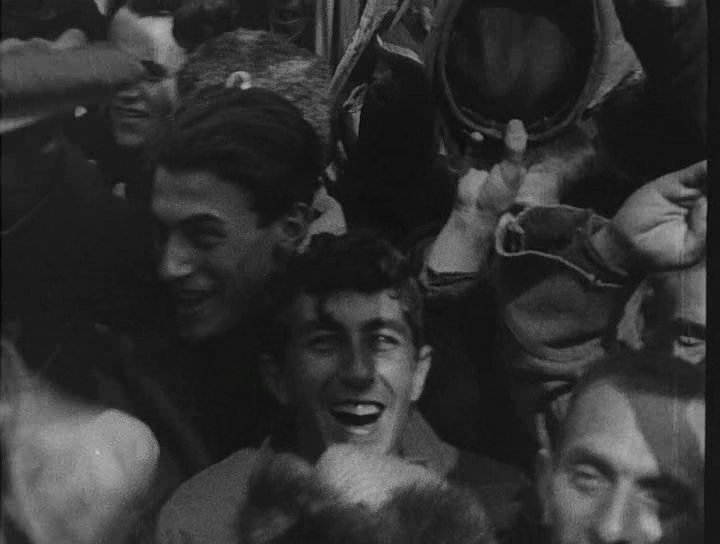
Thus emerges the first facet of Kyiv: a political capital, an epicenter of social upheaval, aspirations, and competing visions of the future. In the scenes set on Saint Sophia Square, those willing to watch with their “peripheral vision” can sense the same solemn excitement and faith in tomorrow that would animate Kyiv’s Maidan movements from 1990 to 2013.Ultimately, the two forces competing for Ukraine’s future—the independence-oriented camp and the pro-Russian one—were already present then, and in many ways remain with us today.
Provincial Kyiv: “Chasing Two Hares”
More than any other screen portrayal, Kyiv is perhaps associated with Viktor Ivanov’s cult classic "Chasing Two Hares" (1961). Surprisingly for a film that openly caricatures the pre-revolutionary world, its creators managed to infuse the satire with a note of nostalgia while simultaneously anchoring it in their own present. This latter quality, incidentally, was characteristic of Soviet cinema as a whole, which rarely valued the past for its own sake.Early in the film, viewers are reminded that the story takes place in the relatively recent past—just half a century earlier. (By comparison, we are now separated from the film itself by more than sixty-five years.) The action was therefore shifted forward in time from its literary source—Mykhailo Starytsky’s 1883 play, itself an adaptation of Ivan Nechuy-Levytskyi’s 1875 work—and relocated to the beginning of the twentieth century, bringing it closer to contemporary audiences.
The underlying themes remain strikingly familiar and quintessentially urban: newly enriched social climbers aspiring to join the “elite,” young people willing to use whatever means necessary to secure their place in the world, and the most time-honored shortcut to wealth of all—marriage.Added to this is the imperial context. Over everything hangs a sense of provincialism imposed from above and, it must be admitted, enthusiastically embraced from below. Kyiv appears here not as the proud ancient capital or the “mother of cities,” but rather as a provincial town of the Russian Empire, albeit one with ambitions. The city’s then-modern center, Khreshchatyk, is mentioned as a fashionable promenade lined with expensive shops and frequented by a “respectable” public.
From this emerges one of the film’s central themes—one that remains relevant to this day: linguistic identity and the status of the Ukrainian language. Interestingly, Holokhvostyi and Pronia are not ridiculed primarily because they speak Russian. In Soviet cinema, Russian was rarely portrayed negatively; if anything, it often served as a marker of an ideologically “correct” character. Ukrainian—or the mixed Ukrainian-Russian vernacular known as surzhyk—was more commonly assigned to secondary, often comic, figures.The audience’s amusement stems instead from the fact that Holokhvostyi and Pronia speak badly. They aspire to a sophistication and cultural refinement they do not possess, awkwardly imitating what they perceive as higher status. In the process, they have lost touch with their own identity—an identity preserved by the film’s more grounded “ordinary people,” Halya and her beloved Stepan.
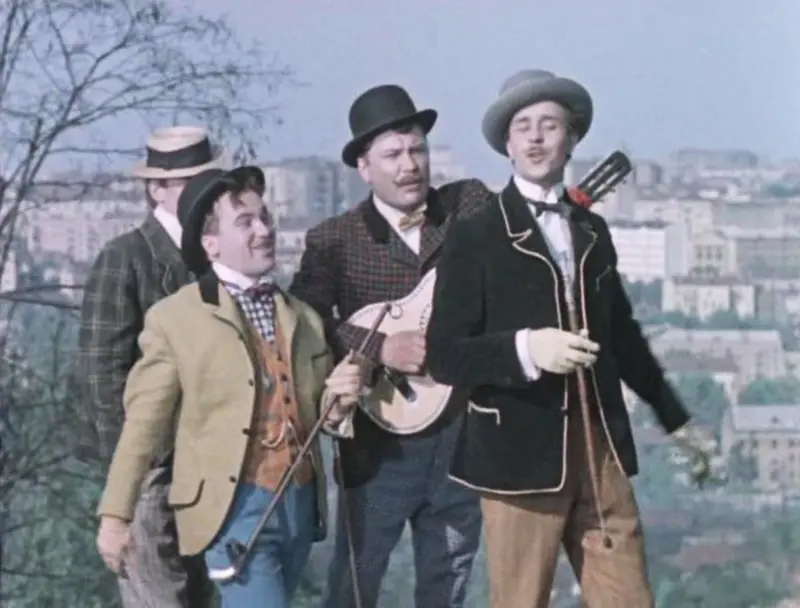
And yet, the film would never have earned such genuine affection from audiences if it were merely a satire of Ukrainian provincialism and its inferiority complex toward the Russian imperial center, with its “urbanity” and “great culture.” Increasingly, viewers are drawn to the image of old, “authentic” Kyiv that appears on screen: historic buildings that could well have been contemporaries of the play itself. There is none of the aggressively polished sheen of the modern metropolis, none of the notorious ill-conceived residential towers clumsily wedged into the urban fabric.
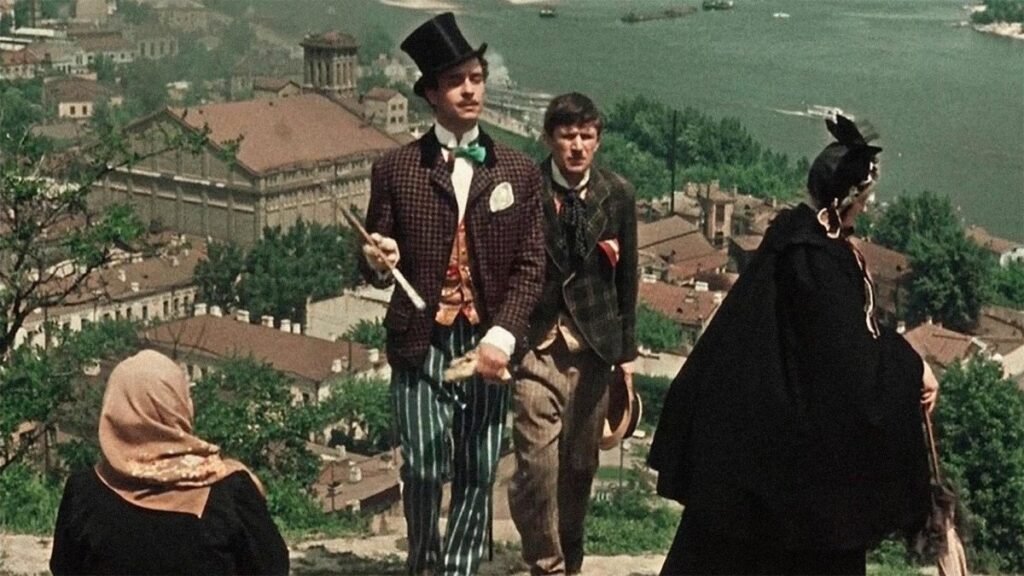
Khreshchatyk is only mentioned in the film; what we actually see on screen are low-rise buildings, small houses with front gardens, and Andriivskyi Descent—still just a street at the time, not yet the “Montmartre of Kyiv.” Even the magnificent rococo St. Andrew’s Church appears somehow lived-in and familiar, almost homely, while the modern city blocks visible in the background serve less to evoke the image of a contemporary metropolis—the Soviet Ukrainian capital—than to underscore the continuing relevance of the story itself.That phrase, “not so long ago, just half a century earlier,” immediately casts the film in a nostalgic light, and the effect only grows stronger with time. We all become a little like Holokhvostyi: in our pursuit of the attractions of modernity, we end up losing our Kyiv.
The Capital’s New Face: "The Years Youth," "Shtepsel Marries Tarapunka," and "The Month of May,"
Aleksei Mishurin’s "The Young Years" was released in 1958, during the Khrushchev Thaw, and is imbued with the spirit of that era: youthfulness—serving as a metaphor for broader social renewal—and optimism about the future. The film follows two aspiring students, Natalka, a young woman from Kyiv, and Serhii, a newcomer from the Donbas, as they apply to a theatrical college in the capital. As was often the case in Soviet cinema, the story touches on social issues alongside its romantic plot. Remarkably, some of these concerns feel just as relevant today as they did then. Among them is the phenomenon commonly known as "blat"—the reliance on personal connections and informal favors—which had become so deeply embedded in the system that it was often treated as a necessary evil rather than something to be openly condemned.
Despite her obvious talent and strong chances of being admitted on merit, Natalka decides to “play it safe.” The good-natured uncle of her suitor—a composer and member of the admissions committee—agrees to “help” both the young woman and her chance acquaintance, Serhii. The arrangement is treated as so ordinary that it provokes no moral hesitation whatsoever—not from the ambitious young applicant, nor from the prominent Soviet cultural figure. Indeed, he is not portrayed as a villain at all. At most, he receives a symbolic punishment at the end of the film when he falls into the water during a fishing trip.
And what of Kyiv itself? The filmmakers seized the opportunity to showcase the city in all its splendor. The center had only recently undergone a massive reconstruction of Khreshchatyk, which had been devastated during the Second World War, and now proudly displayed its brand-new neo-Baroque architectural ensemble.The camera lingers over these sights with evident delight, moving from the stately grandeur of Khreshchatyk to the opulent halls of the theatrical college, and from there to the city's lush parks and the broad waters of the Dnipro. The result is a visual celebration of Kyiv as a confident socialist capital, radiating renewal, ambition, and vitality.
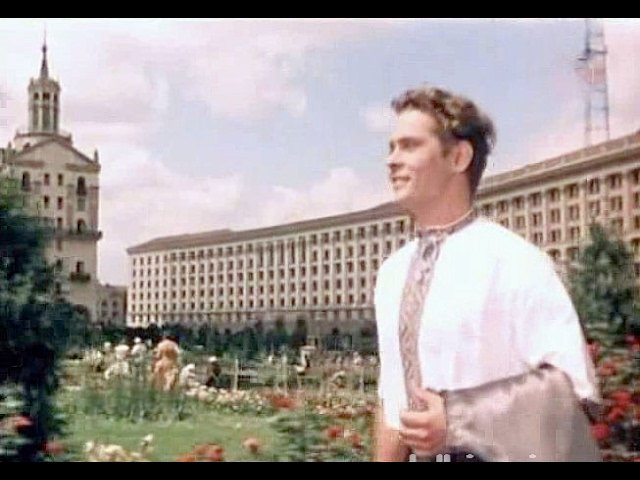
Kyiv itself is central to this vision. "The Years Youth" is one of the few films in which the city appears unmistakably as a capital—a true center of gravity, a place people aspire to reach, where dreams can be fulfilled, and which gathers the country's diverse regions beneath its wing.Indeed, the unity of Ukraine—albeit viewed through the Soviet lens of a socialist republic—is one of the film’s key motifs. The story opens in the Donbas, where Natalka is visiting. It is there, on her journey back to Kyiv, that fate brings her together with Serhii, who is applying to the very same theatrical college.Rushing to catch her train, Natalka remains dressed in the stage costume of a “young proletarian.” As a result, Serhii mistakes her for a teenage boy, and she mischievously introduces herself as her own fictional brother. After all, every film needs at least a little intrigue.
The Ukrainian regional identity of the Donbas is beyond doubt in the film. The performances at a local amateur concert blend elements of Ukrainian folk culture with those of an urban working-class environment. It is also in this film that Serhii, the young man from the Donbas, sings Andrii Malyshko’s famous "Song of the Rushnyk" for the first time while traveling by train from the Donbas to Kyiv.It is worth remembering that every Soviet film was produced under a system of strict, multi-layered oversight and ultimately required final approval in Moscow. The Donbas’s Ukrainian character—and its place within Kyiv’s orbit, not only politically but culturally as well—therefore raised no objections even from the Soviet “Center.”
The splendor of the rebuilt postwar Kyiv—from Khreshchatyk to the newly constructed university buildings—as well as the atmosphere of the post-Stalin Thaw, with its growing weariness of revolutionary utopianism and its renewed focus on private life, can also be found in other films of the period. Among them are "Shtepsel Marries Tarapunka" (1957, directed by Yukhym Berezin and Yurii Tymoshenko—the celebrated comedy duo Shtepsel and Tarapunka themselves) and "May, the Merry Month" (1965, directed by Hryhorii Lipshyts).
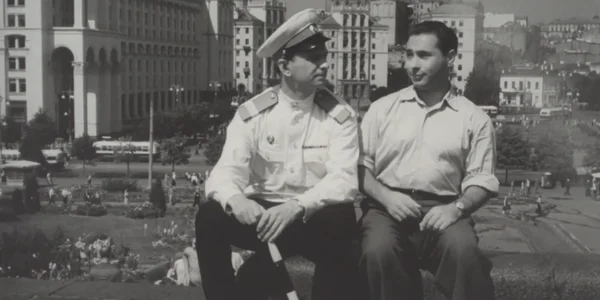
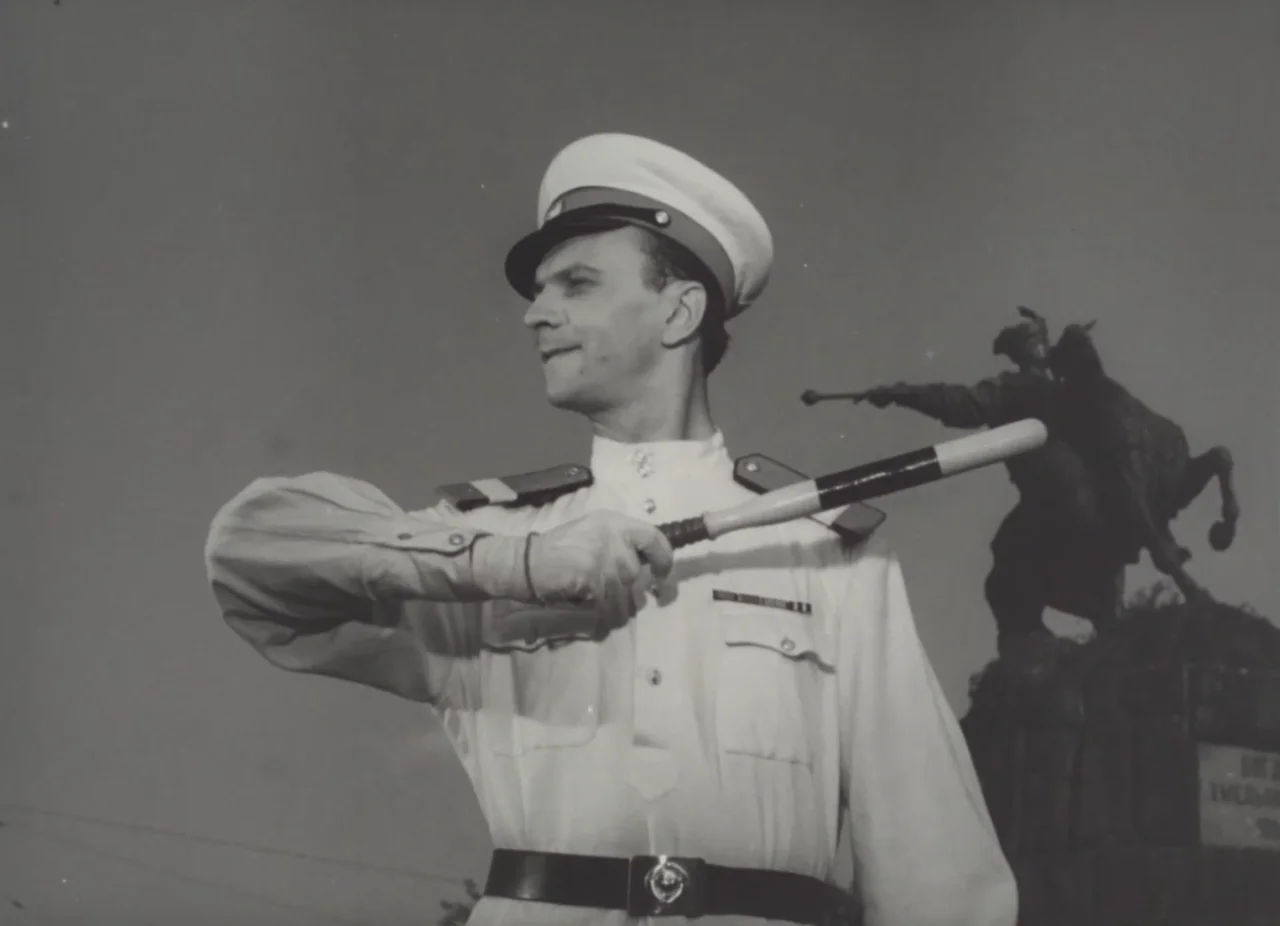
In the former, Tarapunka, a Kyiv police officer, unexpectedly becomes a variety-show star while navigating a series of comic misunderstandings involving his beloved Halya, a member of an amateur performance troupe from Reshetylivka. The hero’s romantic troubles unfold against the backdrop of lovingly photographed panoramas of Khreshchatyk, which almost become a character in their own right.Many of the film’s themes echo those of "The Young Years": the newly rebuilt and resplendent Kyiv, Kyiv as the capital that brings together the country's regions, and Kyiv as a space of social mobility and opportunity. One episode, for instance, revolves around a large-scale republican amateur arts festival that draws participants from across Soviet Ukraine. Indeed, the similarities are hardly surprising, given that only a single year separates the two films.
In "The Month of May," a student couple files an application to marry but, according to the rules, must wait another month before the marriage can be officially registered. Through a twist of circumstances, they are mistaken for an already married couple and—somewhat scandalously by the standards of puritanical Soviet society—spend that month living together as husband and wife, while experiencing all the difficulties of learning to live with one another.

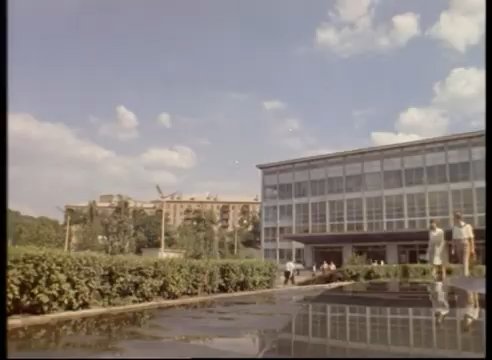
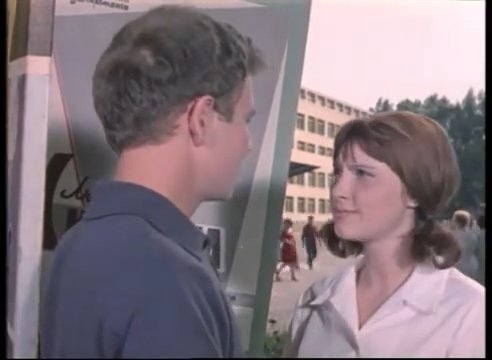
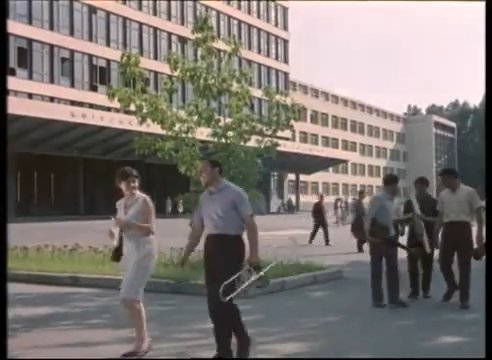
Alongside the imposing Soviet neoclassicism of the city center, the couple’s life unfolds amid the modernist architecture of the 1960s student campus. Adding to the film’s lyrical atmosphere are the nighttime streets of the big city, the Dnipro embankment with its parks, and the open-air summer theater.This is an emphatically everyday comedy, drawn from the contemporary lives of young people who were meant to recognize themselves in its characters. Accordingly, Kyiv in the film appears neither as a symbol nor as a city of dreams, but as a mid-twentieth-century metropolis where ordinary people solve ordinary problems—problems that are familiar and understandable to the audience.
Kyiv in Cinema as a Place of Memory: "The Seventh Route"
In the cinema of independent Ukraine, Kyiv acquires a new dimension. During the 1990s, cinematic portrayals of the city became more inward-looking and intimate, while increasingly focusing on the ambivalence of life in a large city.
Warm and lyrical, though tinged with a considerable measure of melancholy, is Mykhailo Illienko’s "The Seventh Route" (1997). The film intertwines two storylines. A struggling poet earns his living as a Kyiv tour guide; while showing the city to a group of foreign visitors, a misunderstanding with the interpreter forces him to improvise, and he begins inventing an entirely new excursion on the spot, using his own biography as an underground Soviet poet as its foundation.At the same time, a young American woman films, with a video camera, the places associated with her mother's youth in Kyiv. Her mother, now an émigré, once lived in the city. The two storylines, the two personal histories, gradually intersect—and the points at which they do are precisely Kyiv’s locations themselves, the sites of memory shared by the aging poet and the émigré woman.
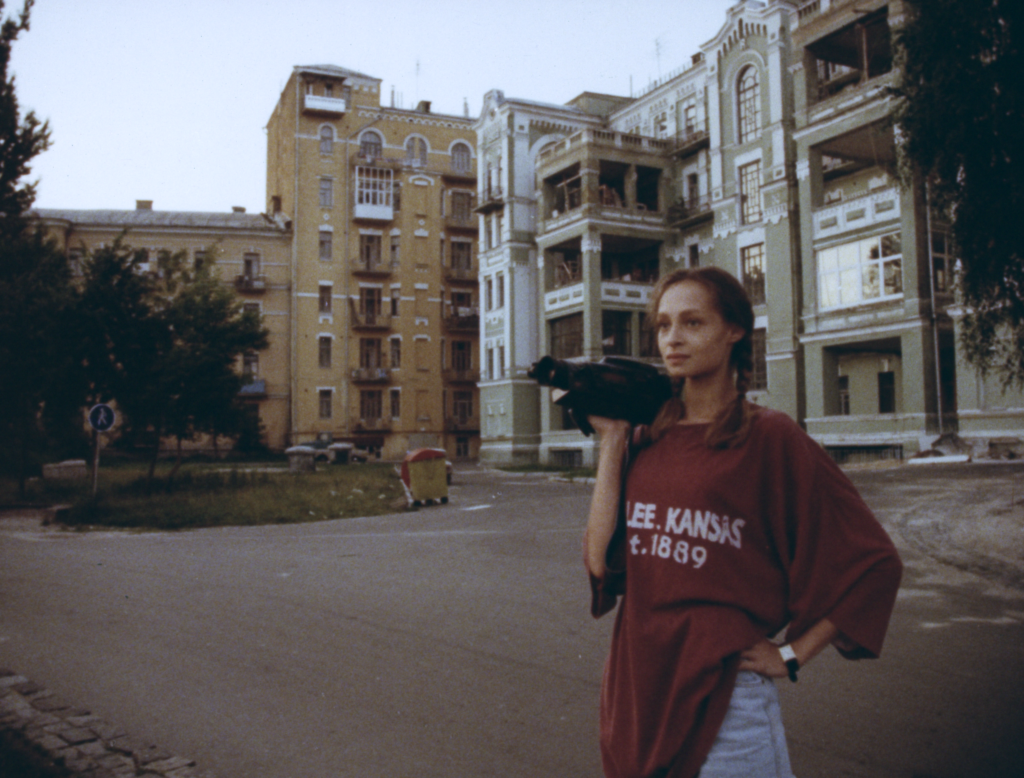
The dreamlike, bittersweet music of Volodymyr Hronskyi, together with the work of the British-Ukrainian diaspora folk-rock band "The Ukrainians"—especially the song "Vorony" ("Crows")—combines Western rock rhythms with Ukrainian melodies and imagery, creating an atmosphere of both loss and rediscovery.Through his improvised excursion, the hero, whose youth and fate have been marked by disappointment, seems to regain control over his own story. The young woman tries to grasp, to literally record on camera, her mother's past. Meanwhile, the foreign tourists seek to revive a connection with their lost "ancestral homeland." All of this unfolds against the backdrop of Kyiv before the construction boom, when the city's face was still defined by old residential neighborhoods, historic buildings, and courtyards overgrown with greenery.Kyiv appears here neither as a piece of "historical exotica" nor as a grand capital-city backdrop, but simply as a city. It is no coincidence that the "seventh route" includes not a single tourist attraction.
The film captures the spirit of its era, with its mixture of freedom, uncertainty, and disorientation. Ultimately, the “seventh route” is needed not only by foreign visitors seeking to discover a different, non-monumental side of their historical homeland, but by Ukrainians themselves. To move forward, one must first come to terms with one's own past.
Kyiv in 1990s Cinema: "A Friend of the Deceased"
A very different side of the era is revealed in "A Friend of the Deceased," directed by Viacheslav Kryshtofovych and based on Andrey Kurkov’s novella Dear Friend, Comrade of the Deceased—with Kurkov himself serving as the film’s screenwriter. Released in 1997 as a Ukrainian-French co-production, the film offers a darker portrait of post-Soviet Kyiv.Its protagonist, a young translator named Tolya, drifts between odd jobs of varying legality while struggling with problems in his marriage. In a moment of frustration, he accepts a friend's offer to “take care of” his wife's lover by hiring a contract killer. Then, in a brief fit of despair, Tolya gives the hitman his own address instead. Realizing what he has done, he is forced to find someone who can “take care of” the killer.In the Kyiv of the 1990s—where everyone is trying to survive one way or another—this proves less difficult than one might expect.
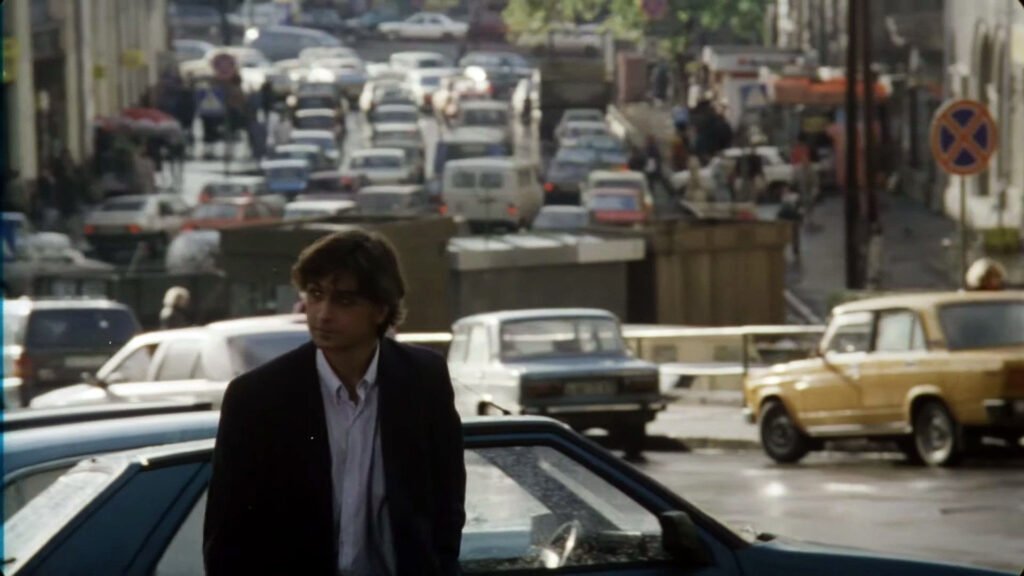
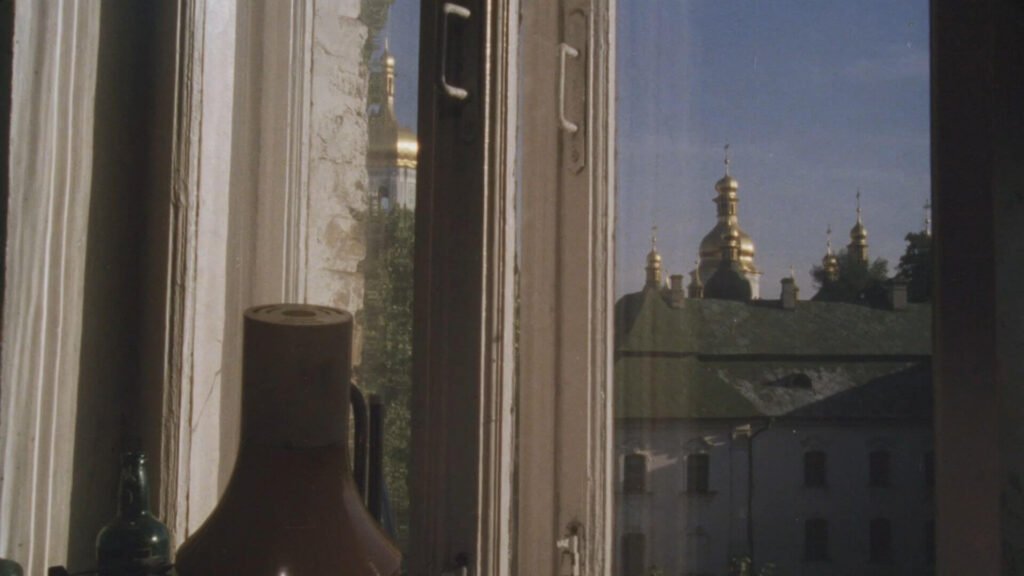
Whereas "The Seventh Route" offers a lyrical portrait of the city—Kyiv as a home—"A Friend of the Deceased" presents Kyiv as a 1990s metropolis: dynamic and constantly changing, marked by stark social contrasts, plagued by chronic crime, financial hardship, and stress, and perpetually somewhat neglected. Yet for all that, the city retains its own charm and attractions, among them one of the era’s most recognizable features: the café where Tolya, despite being unemployed, spends much of his time.And still, beneath all these contemporary layers, one can discern the Ukrainian “eternal city,” with its golden domes—visible from the window of Tolya’s apartment—its Podil streets, and the “picturesque ruins” of its older architecture.
An ironic perspective: “The Hero of My Time”
Yet a capital city is not only about great historical events, nor only about personal dramas that seem especially elevated against a backdrop of monumental architecture or the hills above the Dnipro. It is also about snobbery, a sense of superiority (usually undeserved), and the pursuit of dreams that all too often ends in disappointment.To balance our survey, let us conclude with an ironic deconstruction of the capital’s allure by the Kyiv-born director Tonya Noyabrova. "Hero of My Time," her feature-film debut from 2018, reworks the classic motif of the provincial newcomer who sets out to conquer the capital.
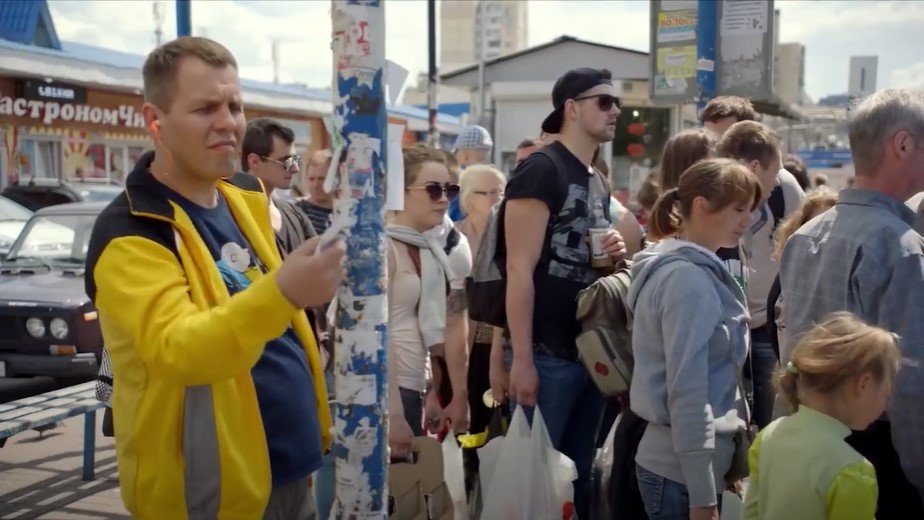
Kyiv, however, is not Paris, and Zhorik is no Rastignac. Accordingly, what awaits the viewer is not a grand Human Comedy in the Balzacian vein, but a merciless—and in many ways remarkably accurate—satire of Kyiv’s particular vices: pretentiousness, bad taste, and the all-conquering phenomenon known in Ukrainian as zhlobstvo.In some respects, the film echoes "Chasing Two Hares," exposing the provincialism hidden beneath the city's awkwardly assembled mask of “metropolitan sophistication.” After all, a considerable share of Kyiv’s residents are themselves former provincials.Markets, grimy apartment entrances with broken elevators, endless queues at government offices with their distinctly post-Soviet atmosphere—all of this appears alongside, and in sharp contrast to, modern shopping malls with expensive boutiques and even a museum of contemporary art, complete with a somewhat comical aspiration to ultra-modernity.
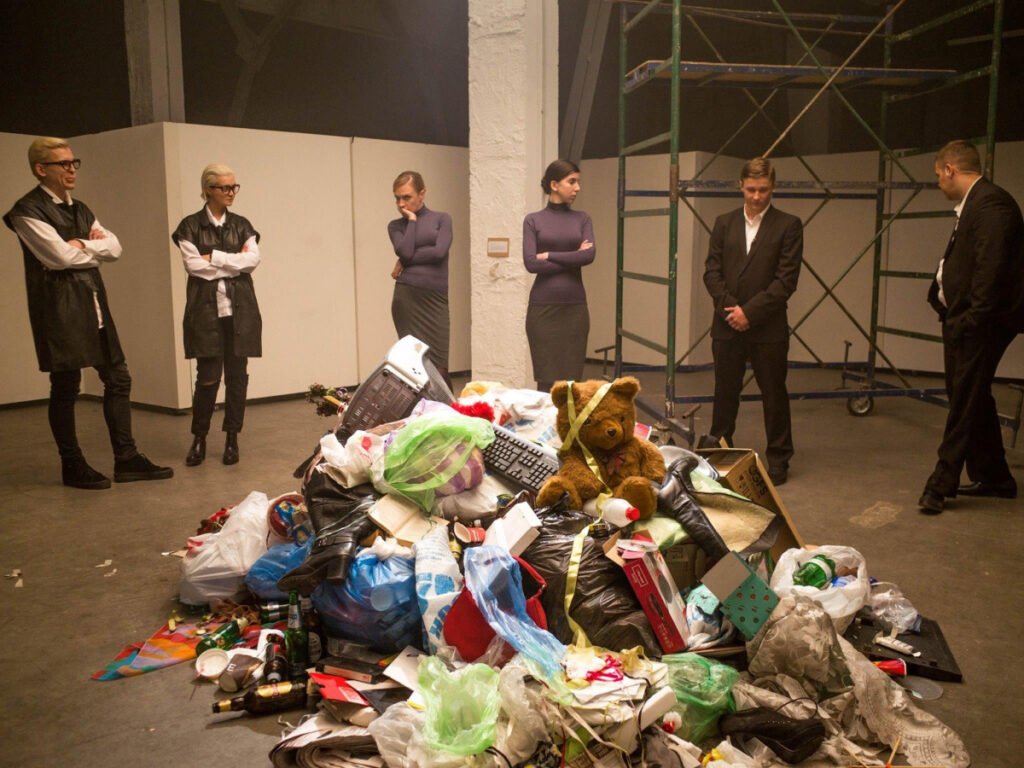
It is precisely there that Zhorik finds work as a security guard, and the museum becomes the setting for one of the film’s sharpest and most amusing episodes—a satire aimed both at Kyiv’s cultural milieu and at the pretensions of conceptual art.In a certain sense, the museum of contemporary art—where the boundary between art and garbage is determined quite literally by the curator’s whim, a figure distinguished more by self-importance than by professionalism—becomes a metaphor for metropolitan life as a whole. Here, value is often assigned rather than earned, appearances matter more than substance, and success depends as much on belonging to the right circle as on genuine merit.
We have touched on only a handful of the cinematic images through which Kyiv has been portrayed on screen—those that, in our view, are among the most vivid and characteristic. In reality, of course, there are many more. Every film shot in Kyiv or about Kyiv carries within it a fragment of the city’s spirit, of its complex history and equally complex present.Perhaps that is precisely why there is no single film that has become the myth of Kyiv. The city is simply too multifaceted, too resistant to neat formulas and unambiguous interpretations. And that is what makes it so fascinating to watch filmmakers attempt to capture it, continually discovering new facets that had previously gone unnoticed.The cinematic journey through the city will therefore continue for as long as Kyiv itself exists.Which is to say: forever.
 English
  Українська